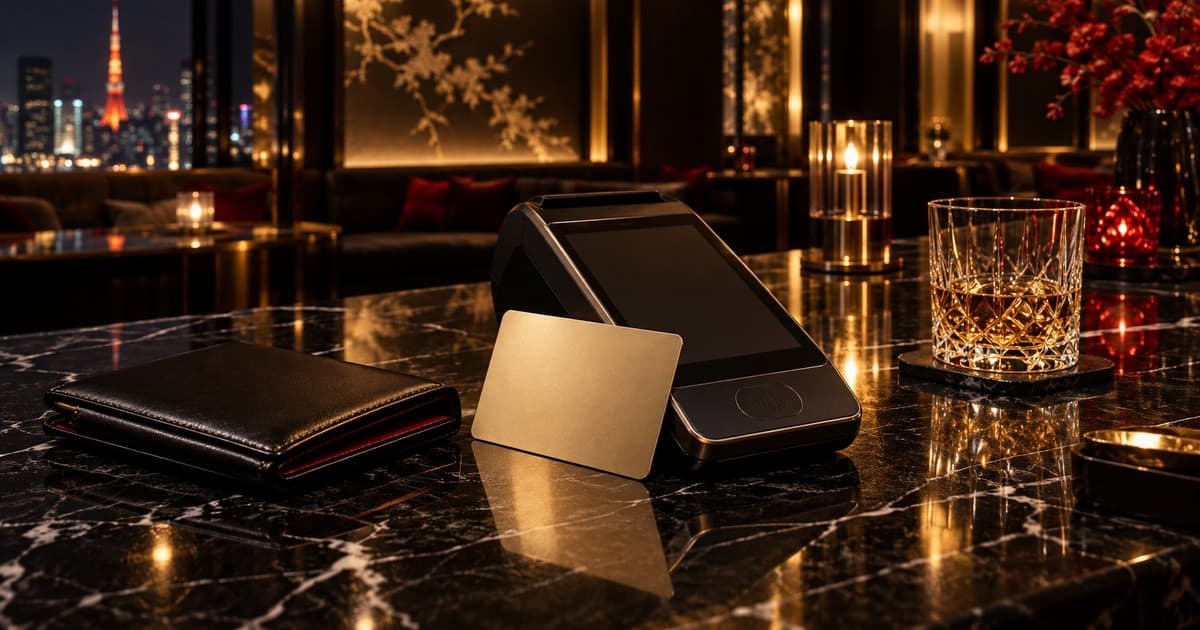
Complete payment guide for Japanese cabaret clubs (KTV). What works, what doesn't: yen cash, Visa/Mastercard/JCB/Amex, UnionPay 银联, Alipay 支付宝, WeChat Pay 微信支付, PayPay, and what to do when terminals fail.
Cash (yen) is universal. Major credit cards (Visa, Mastercard, JCB) work at almost all premium Tokyo venues; Amex is less consistent. UnionPay (银联) is widely accepted at premium Roppongi and Ginza venues. Alipay (支付宝) and WeChat Pay (微信支付) acceptance is growing fast. Bring cash backup even when paying by card — foreign-card declines happen.
The 5 payment methods (ranked by reliability)
1. Cash — yen (¥) — 100% accepted
Every legitimate Japanese KTV accepts cash. ATMs are available 24/7 at convenience stores (7-Eleven, FamilyMart, Lawson) in all major nightlife districts. Withdraw enough to cover your expected bill plus a 20% buffer.
2. Credit cards (Visa, Mastercard, JCB)
Accepted at the vast majority of premium Tokyo venues (Roppongi, Ginza, Akasaka). Standard rules:
- Foreign-issued cards work, but occasional declines happen — bring backup.
- Confirm before ordering high-ticket items like bottle keep.
- Amex acceptance is less consistent than Visa/Mastercard/JCB.
- Diners Club works at select premium Ginza venues only.
3. UnionPay (银联 / 銀聯)
Standard at premium Roppongi and Ginza venues serving Chinese-speaking guests. If you're visiting from Mainland China, Hong Kong, or Macau, your UnionPay card will work at most premium establishments. Always confirm at reception.
4. Alipay (支付宝) & WeChat Pay (微信支付)
Acceptance is growing fast in 2026 as Tokyo KTV venues adapt to inbound Chinese tourism. Currently available at:
- Roppongi premium venues with Chinese-speaking staff
- Selected Ginza high-end clubs
- Newer venues built or refreshed in the past 3 years
Always scan the venue's QR code at reception or wait for staff guidance.
5. Japanese QR payments (PayPay, LINE Pay)
PayPay is the dominant Japanese QR payment, accepted at many newer venues. LINE Pay coverage is smaller. These require a Japanese phone number to register, so they're more useful for residents than tourists.
Common payment pitfalls
- Card declines — Always carry enough cash to cover the bill. Foreign card declines happen even at legitimate venues due to fraud algorithms.
- Tipping is not customary — service charge is already on the bill. Don't add cash on top.
- QR receipts — Take a screenshot of any QR payment confirmation before leaving.
- Bottle keep deposit — Some venues require cash deposit for bottle keep — confirm policy before agreeing.
- Exchange rates — Card transactions are settled in yen and converted by your card issuer, not the venue. Check your bank's foreign transaction fees.
Pre-visit checklist
- Withdraw ¥20,000–¥50,000 cash from a convenience store ATM
- Bring at least 2 credit cards from different networks (Visa + Mastercard, or Visa + JCB)
- If you have a UnionPay, Alipay, or WeChat Pay account, confirm with the venue's reception in advance
- Notify your card issuer of travel to Japan to reduce decline risk
- Set up a digital wallet (Apple Pay / Google Pay) as backup for contactless payments
Frequently Asked Questions
Can I pay entirely with WeChat Pay in Tokyo KTV?
At growing number of premium venues, yes. Confirm at reception before ordering. Always have cash backup.
Are there ATM withdrawal limits?
Most convenience store ATMs allow ¥100,000–¥200,000 per transaction with foreign cards, depending on your bank.
Should I tip the cast or staff?
No. Service charge (10–20%) is automatically added to the bill. Tipping cash is not customary and can be confusing.
What if the card terminal fails?
Pay in cash. This is why backup cash matters. Venues rarely accept "I'll come back tomorrow with cash."
Plan your visit
For full pricing context, read our complete cost breakdown. For language and area considerations, see the Complete KTV Guide for Foreigners. Or message our free bilingual concierge for payment-method-specific venue recommendations.